Choosing a fence gets more complicated when the ground isn't level. A fence that looks straightforward on paper may cross a gradual hill, a sharp drop, a drainage area, or several smaller grade changes before it reaches the end of the property.
That makes sloped and uneven yards an important consideration for homeowners in Mars, PA, and surrounding Western Pennsylvania communities.
The right fence is not determined by material alone. You also need to consider how the fence will follow the terrain, whether gaps will appear underneath it, where gates will be located, and what you need the fence to accomplish.
Understanding those details before choosing a fence can help you select a design that fits the property rather than trying to make the property fit the fence.
Why a Sloped Yard Changes the Fence Decision
On a level yard, fence sections can usually maintain a consistent relationship with the ground from one end of the run to the other. Once the elevation changes, the installer has to account for that difference.
The grade can affect:
- The appearance of the top of the fence
- The amount of open space underneath the fence
- Post and panel placement
- Gate location and clearance
- Which fence designs are practical for the property
- How the fence will follow changes in elevation
Slope matters, but consistency matters too. A long, gradual incline presents a different situation from a yard that is relatively level and then drops sharply near one corner.
That's why you should consider the entire proposed fence line, not just the yard's general appearance.
How Should a Fence Follow a Sloped Yard?
One of the most important considerations when installing a fence on uneven ground is how the fence will follow the natural contours of the property.
At Fence By Maintenance Service, we prioritize
racked and contoured fence installations to create a clean, professional appearance that complements the landscape.
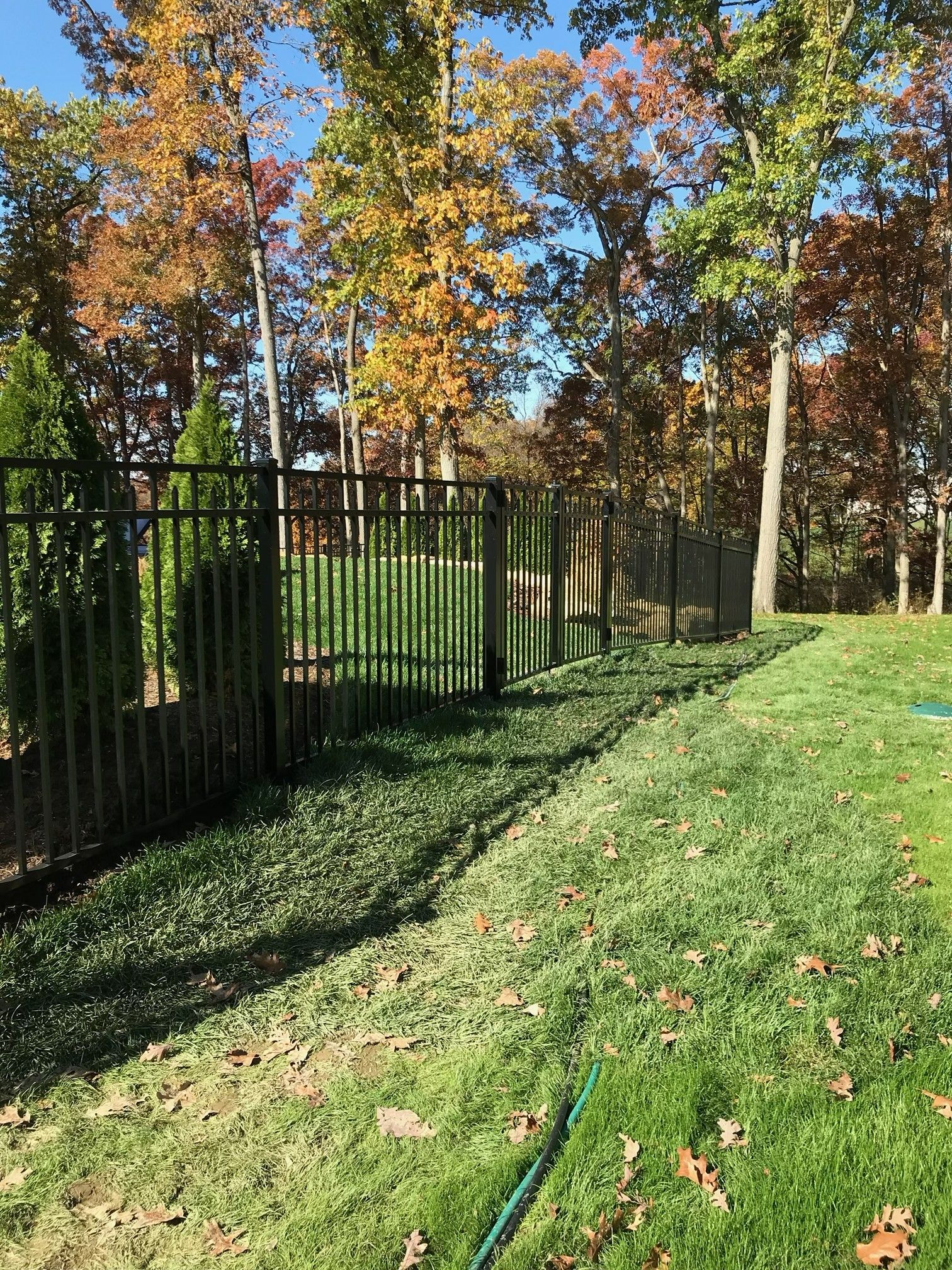
With a racked or contoured installation, the fence adjusts to the angle of the ground rather than remaining completely level. This creates a smoother visual transition and helps maintain more consistent clearance underneath the fence.
Another installation method, known as stepping, keeps individual fence sections level while lowering each section as the ground slopes downward. This creates a stair-step appearance that can leave larger gaps beneath portions of the fence.
While stepped installations are sometimes used in the fencing industry, they are not our standard approach. We believe that following the natural grade generally creates a more attractive, professional finished product.
Our fencing products are designed to accommodate varying degrees of racking or contouring, allowing us to work with a wide range of sloped properties.
Stepped installations are rarely necessary and are generally reserved for special circumstances, such as transitions over retaining walls, or when specifically requested by a homeowner.
The goal is to choose a fencing solution that works with the terrain while maintaining both appearance and functionality.
Think About Gaps Beneath the Fence Before Installation
One of the most important questions on an uneven property is what will happen along the bottom edge of the fence.
Changes in elevation can create noticeable openings if the fence does not properly follow the ground. These gaps may be acceptable for one property and a significant concern for another.
For example, bottom clearance becomes especially important when the fence is intended to:
- Help contain a dog
- Create visual privacy
- Separate a yard from a neighboring property
- Create a more enclosed backyard
- Maintain a consistent finished appearance
- Enclose a swimming pool
A homeowner primarily interested in marking a property boundary may have very different concerns from someone installing a privacy fence around a backyard.
For swimming pool enclosures, ground clearance is especially important. The International Residential Code (IRC) specifies a maximum vertical clearance of 2 inches between the ground and the bottom of a pool barrier. While this requirement does not generally apply to other residential fences, Fence By Maintenance Service typically recommends maintaining approximately 2 inches of ground clearance when practical to achieve a clean, consistent appearance.
For other fence installations, ground clearance depends on the material, terrain, drainage, and intended purpose of the fence. While the 2-inch pool barrier requirement does not generally apply to other residential fences, Fence By Maintenance Service typically recommends approximately 2 inches of ground clearance when practical.
Racked and contoured fencing can help minimize uneven gaps by allowing the fence to follow the slope more closely.
It is much easier to plan around potential clearance issues before installation than to discover afterward that an opening is larger than expected.
How Fence Style and Material Affect Your Options
Terrain should influence the fence style you choose, but that does not mean every sloped yard requires the same material.
Different fence systems handle grade changes differently, and the amount of slope they can accommodate depends on the specific product and design.
At Fence By Maintenance Service, we work with fencing materials that can rack or contour to accommodate changes in elevation, helping homeowners achieve a consistent and professional appearance.
Wood Fencing
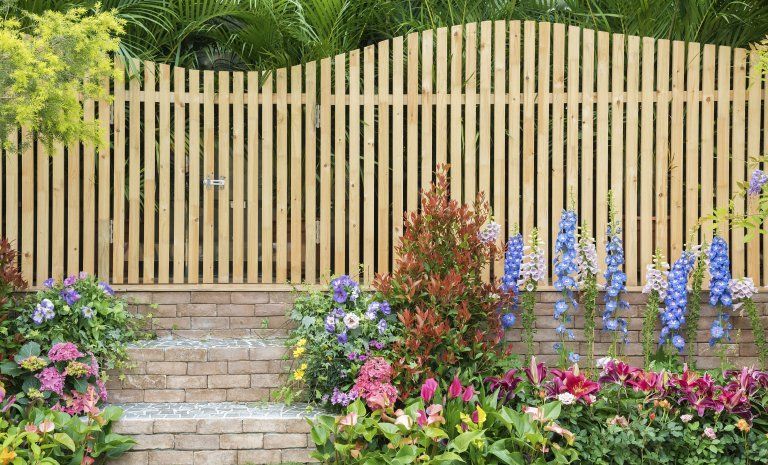
Wood offers considerable design flexibility because many wood fences can be built to fit a property's specific layout.
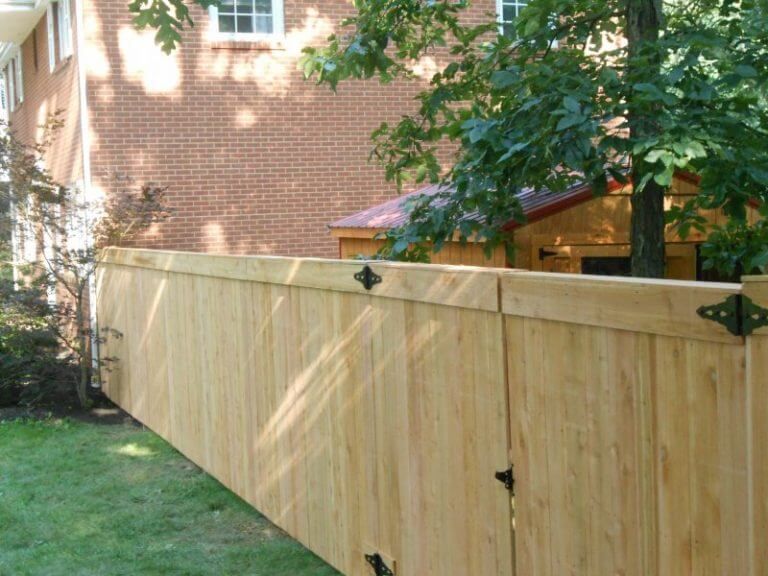
On uneven terrain, wood fencing can be customized through board placement, rail layout, and section design to follow changes in elevation.
This flexibility makes wood a practical option for homeowners who want a fence that complements the natural contours of their property.
The important question is how the finished fence will relate to the ground. A solid wood privacy fence has different clearance requirements than an open picket or rail design.
Ornamental Fencing
The open design of ornamental fencing can work well where homeowners want to define or secure an area without creating a solid visual barrier.
Many ornamental fence systems are designed to accommodate grade changes through racking, allowing sections to follow the slope rather than creating a stepped appearance.
The amount of adjustment available depends on the specific product and the steepness of the terrain.
If you are considering ornamental fencing for a sloped area, ask how the selected system will follow the grade and what the finished fence line will look like before making a final choice.
Chain Link Fencing
Chain link is often considered when the primary goals are boundary definition or containment rather than full privacy.
Its flexible construction gives installers options for following changes in terrain while maintaining a consistent fence line.
Even so, the grade still needs to be evaluated carefully so that the bottom of the fence, posts, gates, and transitions are properly planned.
A properly installed chain link fence can follow the contours of many uneven properties while providing practical containment and security.
PVC and Privacy Fencing
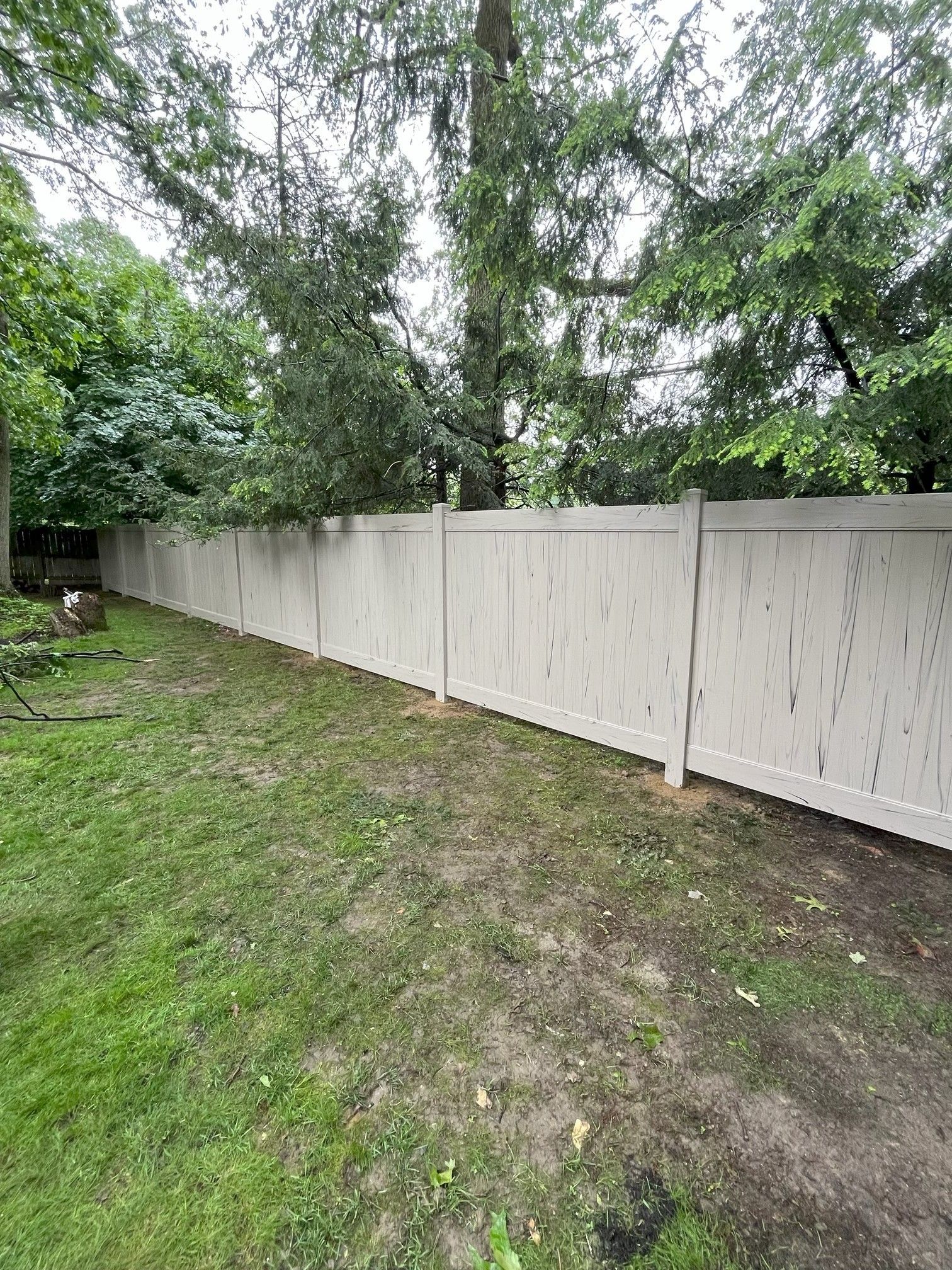
A solid or semi-private fence makes bottom gaps more noticeable because it is meant to provide greater visual coverage.
PVC fencing systems vary in how much slope they can accommodate, making product selection especially important for uneven properties.
Fence By Maintenance Service uses fencing products designed to rack or contour to the grade, allowing us to create a more natural transition across sloped areas.
Before choosing a PVC or other privacy fence, determine how the specific system will handle the property's elevation changes and what clearance may remain beneath the fence.
Split Rail Fencing
Split rail can make sense when the main goal is defining a boundary while keeping the property visually open.
Because it is not a solid privacy fence, homeowners may be more comfortable with natural changes between the fence and the ground.
However, the slope still affects post placement, rail positioning, and the finished fence's overall appearance.
The right choice depends on the fence's purpose. Privacy, pets, appearance, property boundaries, and maintenance priorities may lead to different solutions on the same piece of land.
Do Not Overlook Gate Placement
The fence itself is only part of the layout. Gates require additional planning on a sloped yard.
A gate needs enough clearance to open and close properly. If the ground rises in the direction of the swing, the grade can interfere with its movement.
This is especially important in neighborhoods where homes are close together and there is limited space between properties.
For example, a homeowner may need a gate along the front fence line to access the backyard from the front yard. If the ground slopes between the houses, installing a standard level gate may create clearance problems.
Fence By Maintenance Service offers custom racked gates designed specifically for sloped areas across our fence material options.
Unlike a traditional level gate, a custom racked gate is built to accommodate the grade, allowing it to maintain proper clearance while following the surrounding fence line.
This provides a practical solution for properties where moving the gate to a flatter location is not possible.
One important consideration is swing direction. Because a racked gate follows the slope, it may only be able to swing in one direction without interfering with the ground.
Planning the gate location, grade, and swing direction before installation helps ensure the finished gate looks professional and functions properly.
Consider gate locations early, especially around driveways, walkways, patios, narrow side yards, and frequently used backyard entrances.
Walk the Fence Line Before Choosing Your Fence
A yard can look fairly level from the house while changing substantially along the actual fence route.
Before settling on a fence style, walk the entire planned line and look for:
- Gradual uphill or downhill sections
- Sudden elevation changes
- Low areas
- Retaining walls
- Changes near driveways or walkways
- Locations where gates may be needed
- Areas where bottom gaps would create a problem
Also think about what is happening on both sides of the proposed fence. Elevation may differ from one property to the next, even when the fence follows a property line.
These details help determine how the selected fence material can be racked or contoured to accommodate the terrain and whether any areas require additional customization.
Questions to Ask Before Installing a Fence on Uneven Ground
Before choosing a fence, ask:
How much does the ground rise or fall along the proposed fence line?
The total grade change can affect the fence design, product selection, and installation approach.
How will the fence follow the slope?
A racked or contoured installation allows the fence to follow the natural grade, helping create a smoother appearance and more consistent bottom clearance.
How much space will remain underneath the fence?
This matters for privacy, pets, appearance, and the enclosure's overall purpose. Pool fencing also has specific safety and code requirements that must be considered.
Can the specific fence product accommodate the grade?
Different products have different racking capabilities. Choosing a system designed for the property's slope helps achieve a more professional finished result.
Can a gate be installed on a sloped section?
Custom racked gates can provide access on uneven ground, including narrow side yards where a level gate may not be practical. The direction the gate swings should also be considered.
Does the fence need to provide privacy, containment, or define the property?
The answer can change which fence styles, materials, and installation details make the most sense.
Planning a Fence for an Uneven Western Pennsylvania Yard
A slope does not prevent you from installing a fence, but it does make planning more important.
Instead of choosing a material first, start with the property. Look at the grade, determine where the biggest elevation changes occur, consider how much bottom clearance is appropriate, and identify where gates need to function.
From there, you can compare fence styles based on how they will actually work on that terrain.
At Fence By Maintenance Service, we specialize in fencing solutions that accommodate the natural contours of your property. From racked and contoured fence installations to custom gates designed for sloped areas, our goal is to deliver a finished fence that looks professional and functions as intended.
We offer wood, PVC, ornamental, privacy, split rail, and chain link fencing for homeowners in
Mars, PA, and surrounding communities.
If you're considering a new fence for a sloped or uneven yard, contact Fence By Maintenance Service to discuss your property, your goals, and the fencing options available for your project. Our team can help you find a solution that follows your property's natural contours while providing the appearance and functionality you're looking for.